Disclosure: GAMENYX’s operator has a paid performance-marketing (CPA) offer for Arknights: Endfield through AfBooster, promoted outside this website. This page contains no affiliate links, and that relationship did not decide what’s below. See our Affiliate Disclosure.
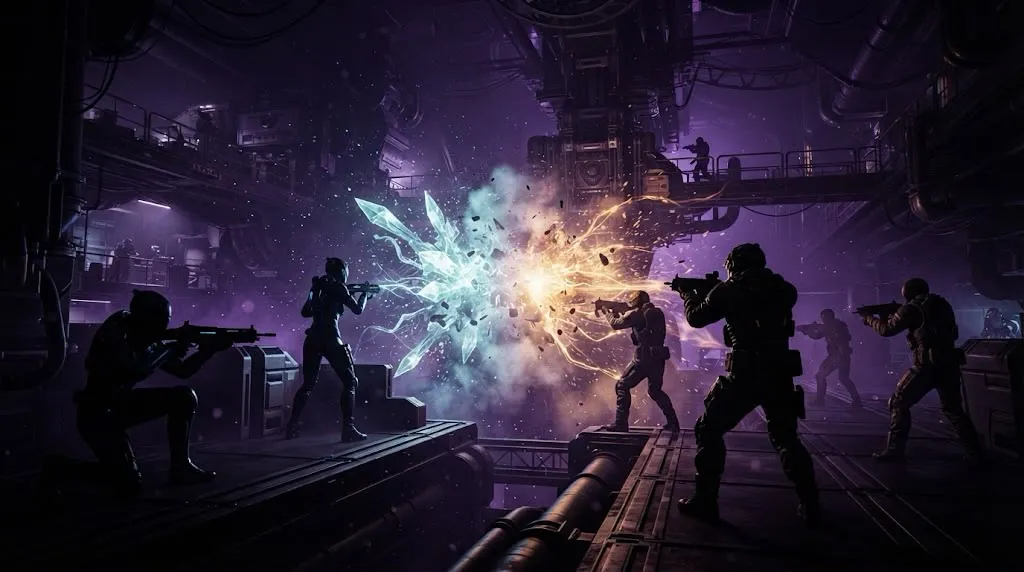
Endfield combat comes down to how a squad’s roles, skills and reactions combine, not how strong any single Operator is on their own. A squad of four powerful Operators that don’t actually work together will underperform a less flashy squad that does, and understanding why matters more early on than knowing which specific Operators are considered strong.
What you’re actually managing during a fight
At any moment you’re directly controlling one Operator, while the rest of your squad acts on their own until you switch to them. Switching is meant to happen instantly, in the middle of a fight, not through a menu you stop to open. That’s why the real skill you’re building is reading a fight well enough to know which Operator should be the one you’re piloting right now, rather than just executing one Operator’s combo well in isolation.
Operators fill different roles, not just different power levels
Endfield groups Operators into distinct roles that do genuinely different jobs in a fight: some are built for sustained close-range physical damage, some specialize in defense and counter-attacking, some focus on Arts-based effects rather than raw physical hits, some exist mainly to set enemies up for other Operators to finish, some provide buffs, debuffs or crowd control, and some exist largely to help the rest of the squad use their own skills more often. A squad built from four Operators who all fill the same role tends to feel powerful in short bursts, then falls apart the moment that one thing stops working. Role coverage is the actual foundation, not something you add once you already have “enough damage.”
Skills draw from a shared resource, so timing matters
Skills aren’t free to use whenever you want. Battle Skills draw from Skill Points (SP), a pool shared by the whole squad that has to build back up through play, so using a skill the moment it’s available isn’t automatically the right call. Holding a skill for the right opening, rather than spending it as soon as it’s up, is a real decision the game is asking you to make, and it’s part of why some Operators exist specifically to help the squad generate that resource faster for everyone else.
Reactions are why type mixing matters
Endfield splits damage into a physical type and several Arts-based elemental types, and mixing them deliberately is where the system rewards you beyond raw stats. Physical damage builds toward its own kind of payoff over the course of a fight, a bigger disruption or burst rather than an instant effect, while different Arts elements can combine on the same enemy to trigger something neither element produces on its own. The exact mechanics shift with updates, so don’t memorize a fixed list of combinations. What matters is that a squad built around genuinely complementary types unlocks effects a single-type squad simply can’t reach, no matter how strong any individual Operator in it is.
Why synergy beats collecting strong Operators
It’s tempting to treat team-building as “whichever four Operators are individually strongest,” but Endfield’s systems are built to reward the opposite instinct. A squad with real role coverage and at least one genuine type-combination will consistently outperform four strong Operators that happen to all want to do the same thing, because parts of the combat system, including reactions, disruption windows and skill-resource generation, only activate when the right pieces are actually present together.
A practical way to read a new Operator
Rather than asking “is this Operator good,” a more useful early habit is asking a short set of questions every time you unlock someone new: What does this Operator actually contribute that your current squad doesn’t already have? What condition or effect do they set up on enemies? Which of your other Operators would actually benefit from that setup? And honestly, what gap is your squad still missing that this Operator doesn’t fix? That last question matters just as much as the other three. Not every strong Operator is the right next addition.
Common beginner mistakes
Stacking a squad with four of the same role because they each look powerful individually is the most common early mistake. It feels strong in short fights, then struggles the moment the fight demands something else. A close second is ignoring support and utility Operators entirely in favor of pure damage, which leaves a squad without the setup or resource generation that makes the damage-focused Operators actually hit their ceiling. The fix for both is the same: build role coverage first, then let type-mixing and reactions be the layer on top of that, not a replacement for it.
A simple team-building mental model
Cover at least two different roles beyond pure damage before worrying about anything else. Make sure your squad includes a genuine type combination rather than four Operators doing the same kind of damage. Keep at least one Operator whose job is helping the squad’s skills come back faster. Once those three things are in place, the specific Operators you pick and the exact reactions you chase matter far less.
If you’re still working out your first squad, our beginner guide covers what to focus on first. If reactions and combat effects are getting visually hard to read in a busy fight, our PC settings guide explains how to tune for combat clarity. You can also visit the Arknights: Endfield hub for everything else we’ve covered.
Sources
Facts in this guide were checked against these pages in October 2026:
- Class (Endfield Talos Wiki: Operator roles)
- SP (Endfield Talos Wiki: the shared skill resource)
- Arts Reaction (Endfield Talos Wiki)