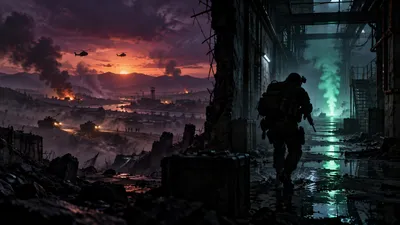
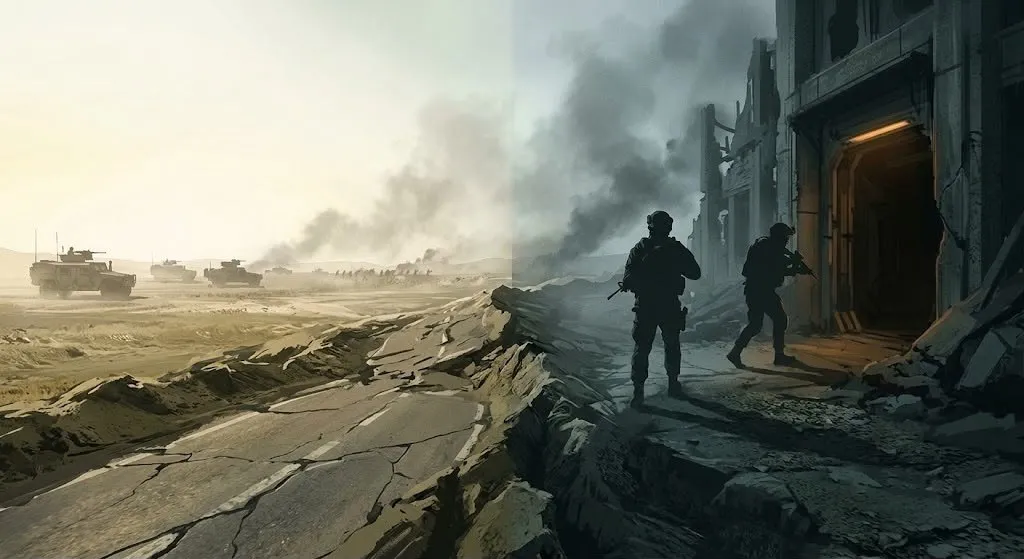
Delta Force isn’t really one shooter. It’s two, sharing a menu screen. The game’s official mode names are Warfare and Operations, and they use different rules for death, loot, and risk. Treating them as interchangeable is the fastest way to have a frustrating first few hours. (Still deciding whether to install it at all? See is Delta Force worth playing in 2026.)
Warfare has no lasting penalty for dying
Warfare is a large-scale mode with up to 32 players per side (32v32), with unlimited respawns and heavy vehicle use, closer in feel to a traditional large-scale military shooter than an extraction game. Because dying just means respawning, it’s a genuinely low-stakes place to learn maps, weapons, vehicles and Operator abilities without risking anything permanent. See our guide to choosing a weapon and loadout once you’re ready to build around a role instead of just experimenting.
Operations can cost you everything you brought
Operations is Delta Force’s extraction-focused mode. Squads deploy into open maps to loot, complete contracts, and fight AI bosses, and the mode is also listed as Hazard Operations in community material. Failing to extract means permanently losing all the gear and loot you were carrying, aside from whatever’s already stored in your Safe Box. This single rule is what makes Operations feel completely different from Warfare, even though it’s the same underlying shooter mechanics.
Gearing up matters more in Operations than Warfare
Before deploying into Operations, you fill your loadout’s core slots: helmet, body armor, a chest rig for quick access to consumables, and a backpack for loot. Getting shot can also cause injuries, each treated with its own medical item, so medical supplies aren’t optional extras. Warfare’s respawn system means gearing mistakes cost you far less, which is part of why it’s the better place to learn equipment basics first.
Start Operations on lower-pressure maps
If you do move into Operations, start on Zero Dam, the map the mode introduces you on, and learn its extraction routes and timing before moving to busier maps. Jumping straight into the highest-risk maps before understanding extraction mechanics is a common way new players lose gear repeatedly without learning why. See our guide to surviving extraction for a deeper breakdown.
What each mode looks like in practice
Warfare puts 64 players on one map, split into teams of 32, in objective matches such as attack-and-defend and king-of-the-hill. Tanks and helicopters are part of the fight, so learning to spot, avoid and counter vehicles is part of the mode, not an extra.
Operations is played in squads of up to three. What you extract goes to your stash, and the long-term goal sits outside any single raid: you spend what you bring home upgrading your Operations Center, which improves your physical attributes, expands your stash and unlocks new gear. That’s the real reason a successful extraction matters more than a high kill count.
A practical way to learn both modes
- Spend your first sessions in Warfare to learn maps, weapons and vehicles with no permanent-loss risk.
- Buy or earn core gear (helmet, armor, backpack, chest rig) before your first Operations deployment.
- Start Operations on Zero Dam rather than the most loot-dense map available.
- Keep your most valuable gear in your Safe Box rather than deploying with everything you own.
Delta Force rewards understanding which mode you’re actually in. A Warfare mindset in Operations gets your gear wiped, and an Operations mindset in Warfare just means you’re playing overly cautious in a mode built for constant respawns. Visit the Delta Force hub for everything else we’ve covered.
Sources
Facts in this guide were checked against these pages in October 2026:
- Operations Mode 101 (official Delta Force guide: Safe Box, loadout slots, injuries, Zero Dam)
- Delta Force on Steam (64-player Warfare, user reviews)
- All maps and modes in Delta Force (Dexerto)